
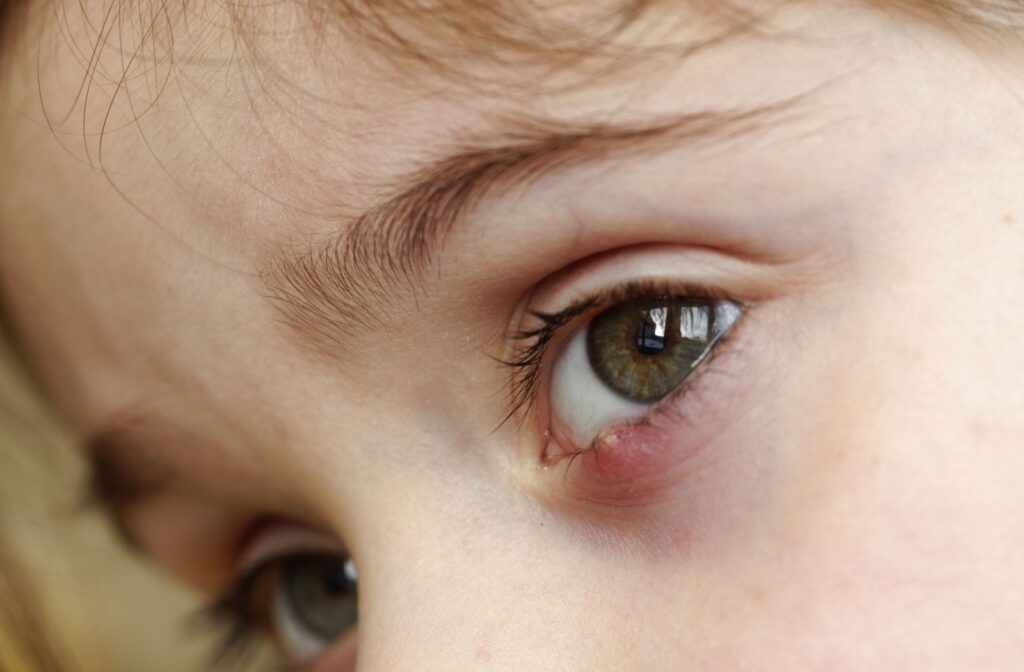
You notice a small, red bump on your or your child’s eyelid that looks like a stye. A few days later, their whole eye is red and goopy. It’s natural to wonder if the stye has caused conjunctivitis, or pink eye.
While they are different conditions, the answer is that the bacteria from a stye can sometimes spread and lead to a case of conjunctivitis.
Styes vs Conjunctivitis
Though they both affect the eye area, styes and conjunctivitis are separate conditions. Knowing the key signs of each can help you figure out what’s going on with your child’s eye.
What Is a Stye?
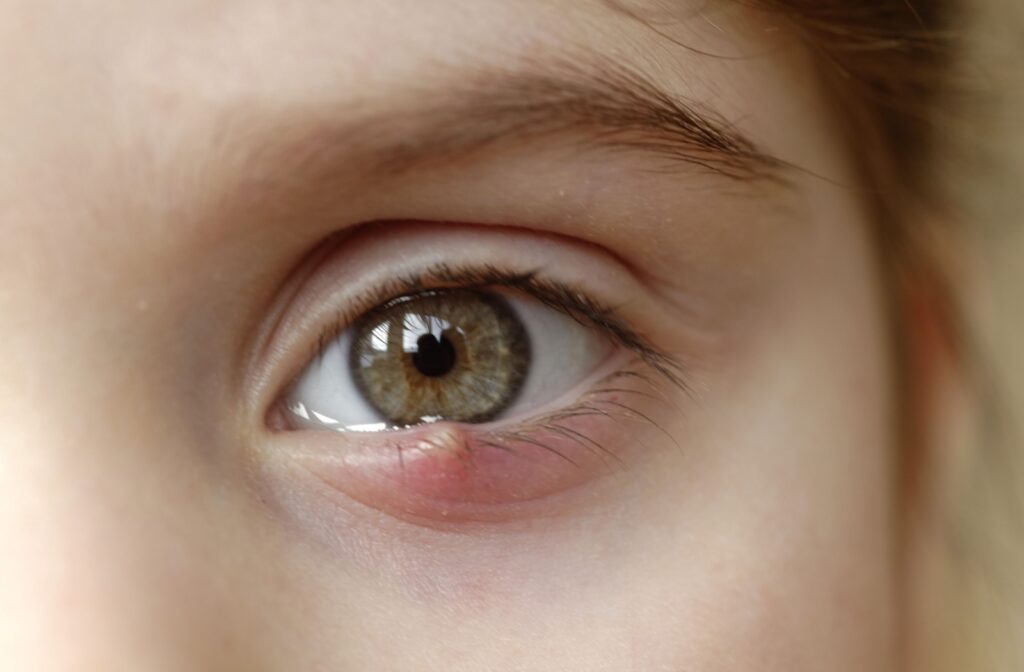
You can think of a stye as a small pimple on the edge of an eyelid. It happens when an oil gland along the eyelid gets blocked and infected. The irritation is usually contained in one specific spot on the eyelid itself. This can look like:
- A small, uncomfortable lump on the eyelid
- Swelling of the eyelid
- A feeling of something being in the eye
- Watery eyes
What Is Conjunctivitis?
Conjunctivitis, also called pink eye, is inflammation of the thin, clear tissue covering the white part of your eye. Unlike a stye, it affects the entire surface of the eye and can easily spread from one eye to the other. There are several types of conjunctivitis, each with its own cause. This can look like:
- Redness or pink color across the white of the eye
- A gritty or itchy feeling
- Gunky discharge that can be yellow, green, or white
- Eyelids that are stuck together after sleep
The Connection Between a Stye and Pink Eye
So, can one really lead to the other? It’s possible. The bacteria that cause an infected stye can spread from the eyelid and cause bacterial conjunctivitis in the eye itself. This often happens if you or your child rubs your eye or if the stye drains. Good hygiene is key to preventing bacteria from spreading from the eyelid to the eye.
Spot Signs of Conjunctivitis in Babies and Toddlers
In addition to the classic pink eye, young children might show other signs of discomfort. Depending on the cause, an optometrist may suggest specific treatments, so it’s good to know if kids can use certain eye drops safely. You may also notice them rubbing their eyes more often or seeming more fussy than usual. Symptoms can include:
- Puffy eyelids
- More tears than usual
- Yellow discharge that crusts over
- Frequent eye rubbing
Is It Pink Eye or Just Allergies?
Allergies can also make eyes red and itchy, but a few key differences can help you tell them apart. Allergic conjunctivitis usually affects both eyes at once with intense itching and a thin, watery discharge. On the other hand, infectious pink eye often starts in one eye and produces a thicker, gunky discharge.
Home Care and Prevention Tips
Proper care can help manage symptoms at home and prevent eye conditions from spreading through the whole family. A few simple steps can make a big difference.
How to Manage a Stye at Home
For a simple stye, gentle home care is often all that is needed. Applying a clean, warm compress to the eyelid for 10–15 minutes a few times a day can help it heal. It is important to never squeeze or pop a stye, as this can spread the infection.
Stop the Spread of Pink Eye
If you or your child has infectious pink eye, hygiene is the top priority to keep it contained. These 3 habits can help protect everyone in your home:
- Wash your hands frequently with soap and water.
- Avoid touching or rubbing the eyes.
- Do not share towels, pillows, or eye makeup.
When to See Your Local Optometrist in Broomfield
While many eye issues can be resolved with home care, some signs mean it’s time for a professional opinion. A visit to your local optometrist in Broomfield can get you a clear diagnosis and the right treatment plan, especially for issues that may be considered eye emergencies.
Signs You Need a Professional Eye Exam
Schedule an appointment if you or your child experiences any of the following symptoms:
- Eye pain that gets worse
- Blurry vision or other changes in sight
- A stye that does not improve after 48 hours
- Increased swelling, redness, or tenderness
- High sensitivity to light
Care for Every Member of the Family
From a pesky stye to an annual vision check, our team at Visionary Eye Care Colorado is here to support your family’s vision health. We can determine the cause of the irritation and create a treatment plan to help you find relief quickly. Schedule an appointment for a clear diagnosis and peace of mind.