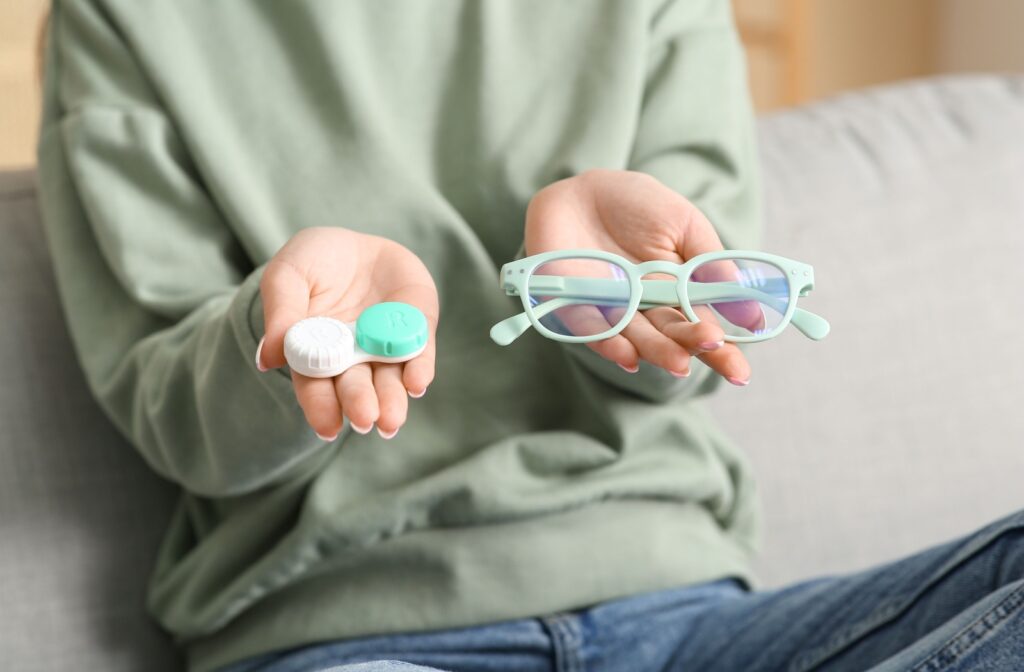
Many people who wear both glasses and contact lenses wonder why they need a separate contact lens evaluation. The reason is that prescriptions for glasses and for contact lenses are not the same or even interchangeable. While both correct your vision, glasses and contact lenses do so from different distances and require different measurements to keep your eyes healthy.
While you can get a glasses prescription during a comprehensive eye exam, a contact lens prescription normally requires a contact lens fitting.
Why Your Prescriptions Are Different
The prescriptions for glasses and contact lenses are quite distinct. Understanding their differences can help you appreciate the care that goes into each one.
The Position of the Lens
Glasses sit a small distance away from your eyes, usually about 12 millimeters. Contact lenses, on the other hand, rest directly on the surface of your eyes. This difference in position changes the power that each device needs in order to properly focus light onto your eyes. For stronger prescriptions, this effect is more pronounced.
Why a “Conversion” Is Not a Simple Calculation
You cannot use a simple chart to convert a glasses prescription to a contact lens prescription. Your optometrist’s expertise is needed to factor in the fit, material, and power of your contact lenses. This helps protect your eye health.
What Your Glasses Prescription Includes
A comprehensive eye exam determines the lens power you need to correct for any refractive error, such as nearsightedness, farsightedness, or astigmatism. It’s a detailed look at how your eyes see the world.
The Refraction Test
During your exam, we use a phoropter to place different lenses in front of your eyes. By asking you which options look clearer, we can find the lens power that offers you the sharpest vision.
Key Numbers on Your Prescription
Your prescription may include a range of different values. The main ones are as follows:
- Sphere (SPH): This indicates the main lens power for nearsightedness or farsightedness.
- Cylinder (CYL): This shows if you have astigmatism (a condition where your eye is shaped a bit more like a football than a basketball).
- Axis: This number tells us the orientation of the cylinder correction on your lens.
What a Contact Lens Prescription Includes
A contact lens fitting involves extra measurements and a trial period to make sure the lenses fit your eyes correctly. It’s about finding the right lens for your eye shape and needs.
Base Curve & Diameter
These measurements are unique to contact lenses. The base curve matches the shape of your cornea (the clear outer surface of your eye), and the diameter measures the lens width. This helps ensure that the lens sits properly and comfortably.
Lens Brand & Material
There are many different types of contact lenses, and different brands use various materials that affect oxygen flow and moisture levels. Your eyes may respond better to one material over another, so your optometrist will help find the brand that works best for you.
Eye Health & Your Family’s Vision
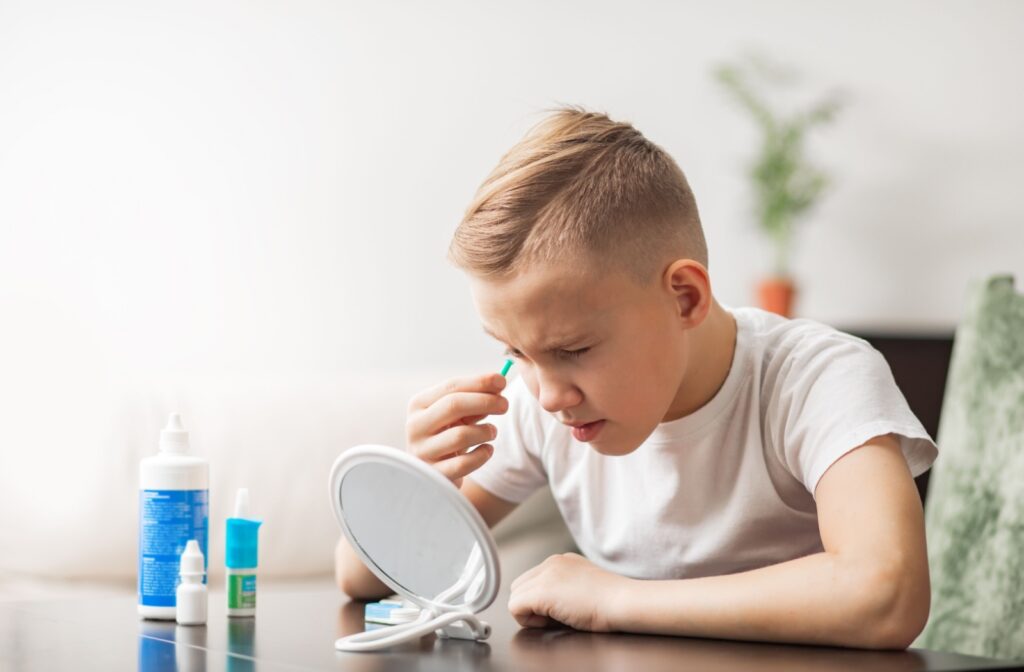
Regular eye exams are a key part of your family’s overall health. This is especially true for children, whose vision can change quickly as they grow. Staying on top of these changes helps support their development.
Why Children Need a Comprehensive Eye Exam
Good vision is important for learning and exploring the world. Since kids may not realize that their vision is blurry, a full children’s eye exam can spot issues early on.
We recommend an InfantSEE exam for infants between 6–12 months, with comprehensive eye exams beginning at 2–3 years old. School-age children should have yearly exams.
What to Expect at an Eye Exam in Broomfield
An eye exam includes more than checking how clear your vision is. We also look at eye teaming and focus, and we assess the overall health of your eyes, inside and out, for any potential issues.
Vision Screenings vs. Full Eye Exams
A vision screening at school can be a helpful tool, but it’s not a substitute for a comprehensive exam. Screenings can miss many common vision problems that a full exam will catch. This makes an annual exam a valuable part of your child’s healthcare routine.
Keep Both Your Prescriptions Current
Prescription Expiration Dates
Contact lens prescriptions are typically valid for 1 year. Glasses prescriptions may be valid for 1–2 years. These timeframes help us monitor your eye health and any vision changes on a regular basis.
Schedule an Exam for Both Glasses & Contacts
If you want to wear both glasses and contact lenses, you’ll need two separate prescriptions.
At Visionary Eye Care Colorado, we’re here to answer your questions and find the right vision solutions for your lifestyle. Schedule your appointment with us today!